
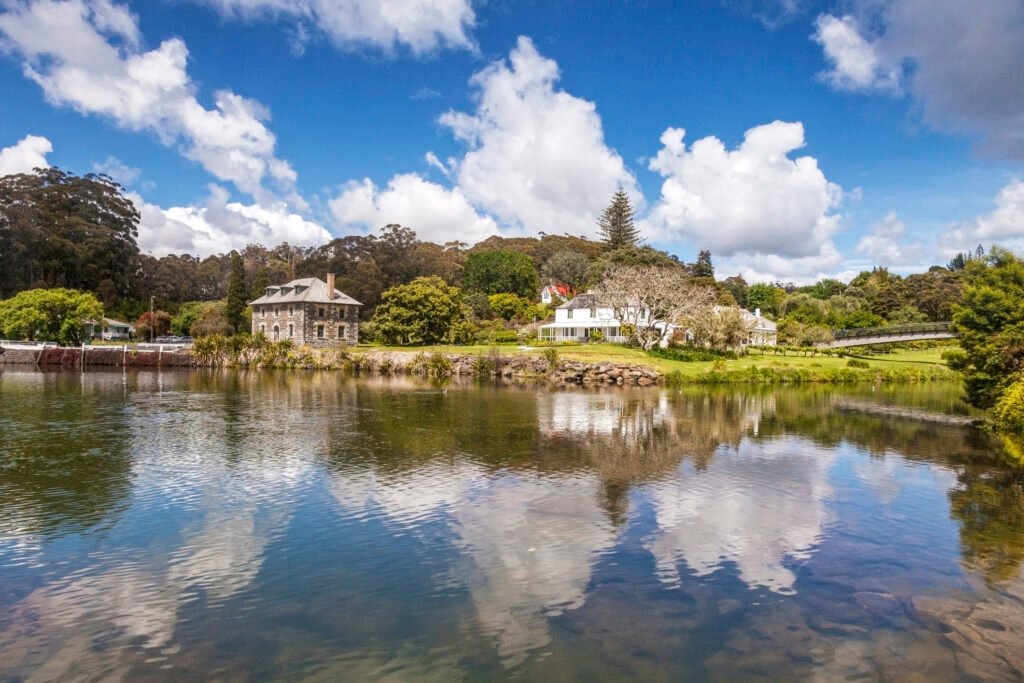
Historic Kerikeri
Kerikeri contains New Zealand's oldest surviving European buildings, both located at the Kerikeri Mission Station in the scenic Kerikeri Basin. These structures date back to the early 1800s and offer a direct connection to the country's colonial history and early Māori-European interactions.
The Stone Store
The Stone Store opened in 1832 as New Zealand's oldest stone building. Missionary traders built this three-story structure to store supplies and goods for the mission settlement. The thick stone walls kept food and equipment dry in the humid climate.
Today you can walk through the original building and see authentic items from the 1800s. The ground floor operates as a working shop that sells heritage goods and local products. Upper floors display historical artifacts and explain how early European settlers lived and traded with local Māori.
The Stone Store sits right beside the Kerikeri Basin waterfront. Its Georgian architecture stands out against the green landscape. You can take photos from the basin walkway or cross the footbridge for different views.
Kemp House
Kemp House was built in 1821 and holds the title of New Zealand's oldest surviving European building. Mission carpenter John Butler constructed this wooden house for his family. The Kemp family later moved in and lived there for three generations.
You can tour the interior to see original furniture, personal belongings, and everyday items from the 1800s. The rooms look much like they did when families lived there. Guides share stories about daily life at the mission station and relationships between missionaries and Māori chiefs like Hongi Hika.
The house sits on a hill overlooking the Kerikeri Basin. Its simple weatherboard design reflects typical early colonial architecture. Tours run regularly throughout the day.
Kerikeri Mission Station
The Kerikeri Mission Station encompasses both the Stone Store and Kemp House within Kororipo Heritage Park. Samuel Marsden helped establish this mission in 1819 as New Zealand's second mission station. The site served as a center for Christian teaching, trade, and agricultural development.
The mission station grounds include walking paths that connect the historic buildings. You can explore the riverside area where missionaries and Māori traded goods. Information panels explain the complex history of the site, including its role as a former Māori pā settlement before European arrival.
The Department of Conservation maintains the heritage park. You pay a small entry fee to access both buildings and support preservation work.